
Devlog
How Much Game Can You Fit Into One Button?
Bunny Hop’s crumbling platforms teach timing, combos and the next jump.
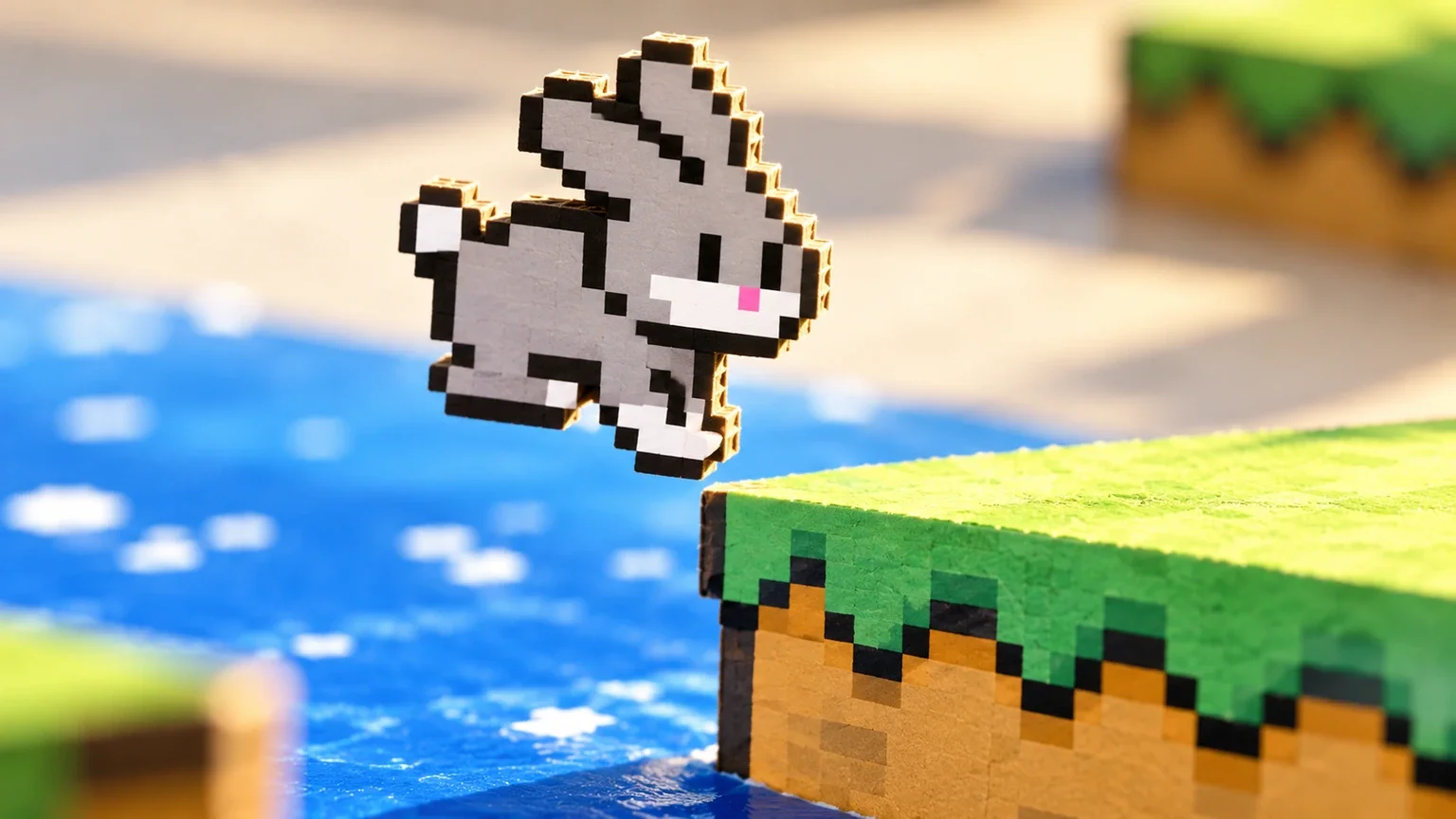
The jump looked good. Bunny clears the water, lands on the next ledge—and the ground starts breaking apart. You’ve made it across. Now you need to leave.
That is the sort of discovery I wanted in Bunny Hop. The NES and SNES games that inspired it let you learn a lot by playing. A new obstacle could change how you used a familiar control. I wanted that feeling in a game you could play with one finger, without stopping for a long explanation.
The controls fit in six words: hold to charge, release to jump. What those words ask of you changes as you play. First you learn to judge a gap. Then a crumbling platform gives you a reason to jump sooner. Eventually, you start preparing the next jump before the current one has finished.
Read the arc, then choose the charge
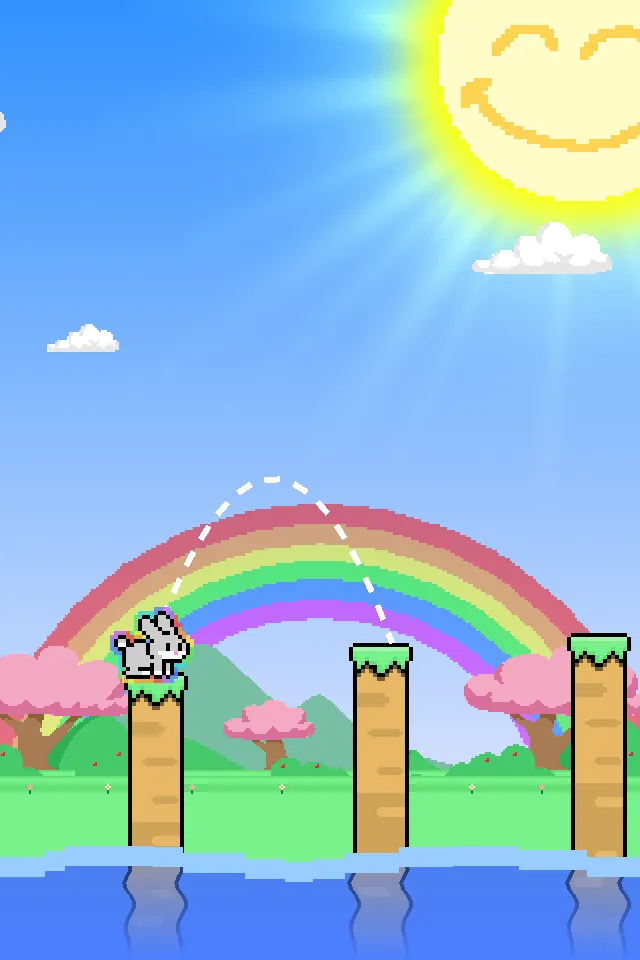
Hold your finger on the screen to build jump power. Release while Bunny is on a platform to take off. A longer hold makes a stronger jump, up to a limit.
A short gap can make that sound easier than it is. You use a charge that felt good on the last jump, sail over the next ledge, and discover that more power was the problem. On a wider gap, that same extra charge might be exactly what you need.
Height changes the decision again. Two landings can be a similar distance away, but a higher one asks you to clear its edge. Reaching the side of a platform is a very different result from coming down on top of it.
You are choosing an arc that has to meet a narrow landing. Distance, height and charge belong to the same decision. One button gives you plenty to judge before you let go.
The platform teaches you to leave
At first, making the landing can be the whole goal. You clear the water, touch down, and turn your attention to the next gap.
Crumbling platforms interrupt that comfortable pause. Their breakdown starts after you land. Spend too long studying your next move and the ledge can fall away beneath you. The place you were aiming for has become a place you need to escape.
That is a lesson the environment can deliver on its own. You feel the pressure to leave sooner because the ground is giving way. I wanted the platform to supply the reason to change your play.
Quicker takeoffs also lead into combos. Take off soon after landing and your combo grows, multiplying the points you earn on landings. Wait too long and the chain resets. The movement that gets you off an unstable ledge can also keep a scoring rhythm alive.
Now a successful jump has a follow-up question: can you read the next landing quickly enough to carry on? Rush the charge and you may fall short. Spend too long choosing it and the combo slips away. You are trying to leave quickly without turning the next jump into a guess.
The next jump starts before you land
Later, faster-crumbling platforms put more pressure on that sequence. Landing, looking, starting a long charge and then releasing can take more time than the ledge gives you. You need to move some of the preparation earlier.
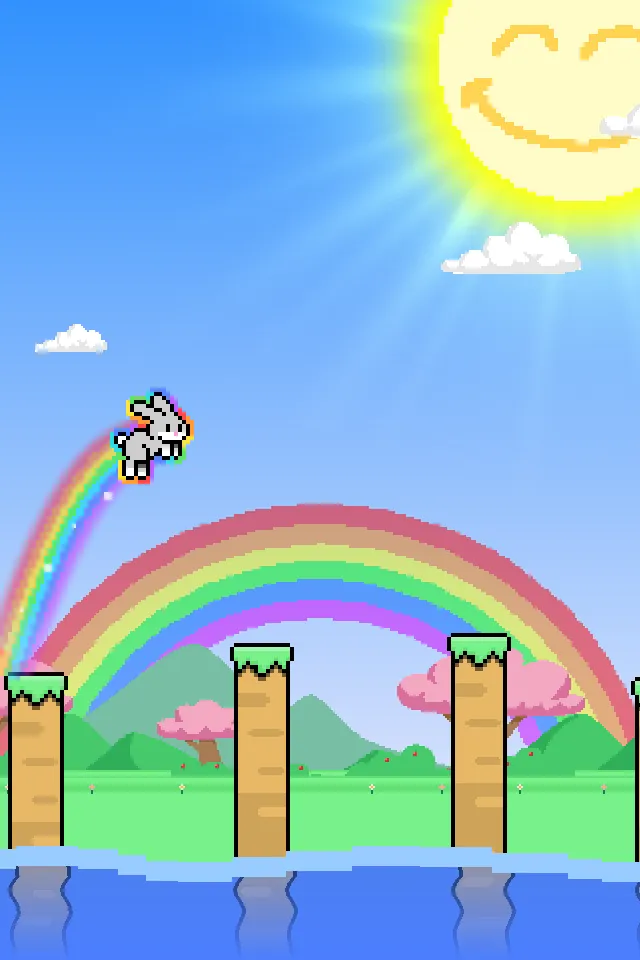
You can start charging the next jump while Bunny is still airborne. Press again during a jump, keep holding as you touch down, then release from the platform to launch the next one.
This is pre-charging. The charge carries through the landing; the next takeoff still happens from a platform. It is preparation for another jump, rather than an extra jump in midair.
Picture a leap toward a crumbling ledge, with a wider gap beyond it. During the first flight, you start building the charge for that second gap. When you touch down, part of the work is already done. You can leave sooner, with a better chance of keeping the combo going.
Starting earlier also changes how much charge you bring to the landing. If the next gap is short, carrying a large charge can send you straight past it. So the question becomes more interesting than “How quickly can I jump?” You are reading one landing while preparing for the one after it.
That is the progression I wanted: crumbling ground encourages quicker jumps; quicker jumps reveal combos; faster-crumbling ground gives you a reason to discover airborne pre-charging. The same hold and release gradually becomes a way to plan a sequence.
Let a close miss tell you something
You do not need to chase that whole sequence on your first run. Start by noticing where a jump went wrong.
A short jump suggests trying a little more charge on a similar gap. An overshoot suggests letting go sooner. A collision with the side asks you to look at the landing height as well as the distance. A close miss can give your next attempt a specific purpose.
The Jump Guide can help you make those comparisons. Set it to Always in Settings to keep it available while you learn. Watch the arc as you charge on a platform, choose when to release, then compare the landing with what you expected. Try judging the gap yourself before checking the guide.
Keep the same character for a few runs so you can get a feel for its jump. Once the landings feel more familiar, try looking one ledge farther ahead. Begin a charge during flight, hold through touchdown, and see how that changes the next takeoff. You can work on one part at a time.
A small control with somewhere to go
The discovery is the reward I wanted from this design. A platform that once hurried you becomes a reason to find a rhythm. A jump that once held all your attention becomes time you can use to prepare another one.
There is still only one hold and release. You have more to do with it.
Download Bunny Hop for iPhone, iPad or Android, and see what the next ledge teaches you.